


The United States has unveiled a new visa-ban policy targeting individuals implicated in religiously-motivated violence in Nigeria — including radical Islamist militants, Fulani militias, and other groups responsible for attacks on Christian communities.
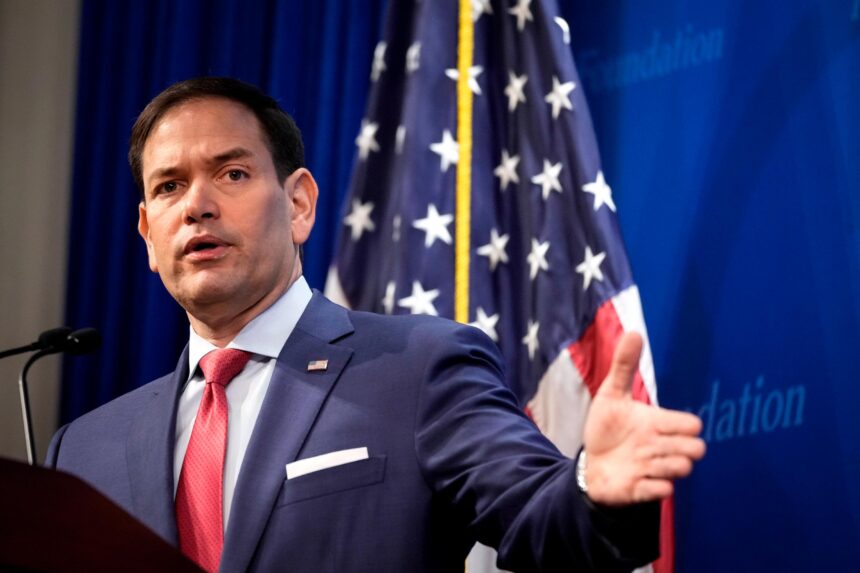
In a statement released on Wednesday, U.S. Secretary of State Marco Rubio said Washington is taking “decisive action” against those who direct, fund, or participate in such atrocities in Nigeria and other affected countries.
The policy, implemented under Section 212(a)(3)(C) of the U.S. Immigration and Nationality Act, empowers the State Department to deny visas to anyone who has “directed, authorised, significantly supported, participated in, or carried out violations of religious freedom.” When necessary, the sanctions may also extend to offenders’ immediate family members.
Rubio said the United States “cannot stand by while mass killings of Christians continue,” echoing concerns previously raised by former President Donald Trump, who had ordered an investigation into the escalating violence.
The announcement follows a closed-door briefing by U.S. House Republicans on worsening religious persecution in Nigeria. Convened at Trump’s directive, the meeting drew members of the House Appropriations and Foreign Affairs Committees, alongside religious-freedom experts. Participants included Representatives Robert Aderholt, Riley Moore, Brian Mast, Chris Smith, USCIRF Chair Vicky Hartzler, ADF International’s Sean Nelson, and Dr. Ebenezer Obadare of the Council on Foreign Relations.
The renewed pressure from Washington comes as Nigeria deepens security engagement with the U.S. through a Joint Working Group approved by President Bola Tinubu. The body was created to implement security agreements reached during high-level talks led by National Security Adviser Nuhu Ribadu.
With rising concerns over terrorism, banditry, and targeted attacks on Christians, the U.S. House Subcommittee on Africa had earlier opened a public hearing on November 20 to assess Trump’s redesignation of Nigeria as a “Country of Particular Concern.” The designation places Nigeria under heightened scrutiny and sets the stage for potential sanctions against Nigerian officials implicated in religious persecution.